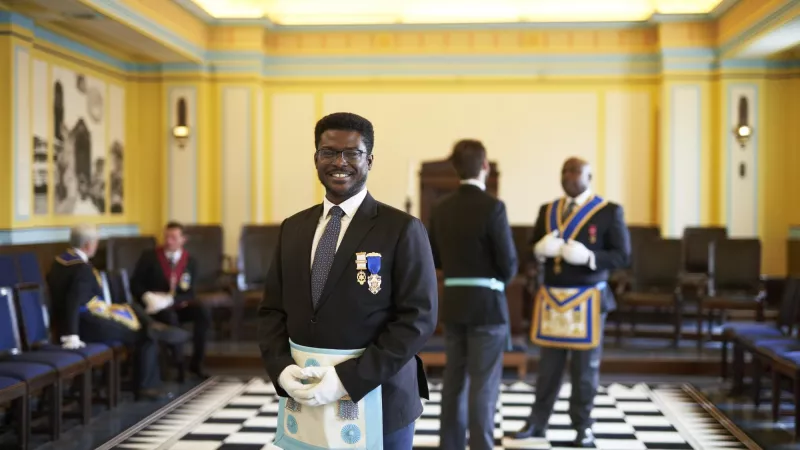
Freemasonry has always attracted questions. Some are fair questions. If you see men wearing aprons, meeting privately, using formal titles and keeping old traditions alive, it is natural to wonder what is really going on.
The problem is that many people hear about Freemasonry first through rumour, television, online comments, or half-remembered stories. That can make the Craft seem stranger than it really is.
At Lodge Tawhiri No. 166 in Hamilton, these questions often come from reasonable men quietly researching Freemasonry in Hamilton and trying to decide whether it is something worth looking into. Most are not chasing conspiracy theories. They simply want plain answers.
Here are some common myths that are worth explaining.
Myth one: Freemasonry is a secret society
Freemasonry is not a secret society in the sense that people usually mean. Lodge buildings are visible. Many Lodges have websites. Members are free to say they are Freemasons, and organisations such as Freemasons New Zealand publish public information about joining, values, charity and Lodge life.
What is private is the detail of certain ceremonies, signs and modes of recognition. That privacy is not there to make Freemasonry sound dramatic. It preserves the experience for candidates and protects the dignity of the ceremony.
Many parts of ordinary life have private elements. Families have private conversations. Clubs have member-only meetings. Boards and committees discuss matters that are not public. Privacy is not the same thing as secrecy.
Myth two: Freemasonry is a religion
Freemasonry is not a religion, and it does not replace a man’s faith. It does not offer sacraments, doctrine, salvation, clergy, or a church. A man’s religion remains his own.
Freemasonry does ask a candidate to believe in a Supreme Being. It also encourages men to take moral responsibility seriously. Within a Lodge, men of different faith backgrounds can meet without trying to win an argument over religion. That is one reason party politics and sectarian religious debate are not part of proper Lodge life.
This is often misunderstood. Freemasonry is not trying to create a new faith. It is asking men to be serious about duty, conscience, integrity and how they live.
Myth three: Freemasons look after each other unfairly
This is one of the more persistent concerns. The fear is that Freemasonry is a private network where men use membership to gain favours, jobs, influence, or protection.
That is not what Freemasonry is for. The Craft teaches integrity, honesty and personal responsibility. Using Freemasonry to gain an improper advantage would be contrary to the point of belonging.
Members may become friends. They may support one another in normal human ways, as friends do. But Freemasonry is not there to help someone avoid responsibility, influence a public decision, or receive special treatment. A man who joins for contacts has misunderstood the Craft before he has even begun.
At its best, Freemasonry should make a man more careful about his conduct, not less.
Myth four: You have to be wealthy or important to join
This is another old idea that does not match normal Lodge life.
Freemasonry brings together men from different occupations, ages and backgrounds. A Lodge room may include tradesmen, professionals, retired men, business owners, public servants, students, fathers, volunteers and men still finding their way in life.
What matters is not wealth or social position. What matters is character. A candidate should be a law-abiding man, joining freely, and genuinely interested in the values of Freemasonry.
That is one of the strengths of Lodge life. Men who might not otherwise meet can sit together, talk together, learn together and serve together.
Myth five: Masonic ceremonies are strange or embarrassing
Masonic ceremonies are formal and symbolic. They use older language, movement and drama to teach moral lessons. That can sound unusual if you have never experienced anything like it.
But the purpose is not to embarrass anyone. Nor is it entertainment, hazing, or a practical joke. The ceremonies are intended to be serious, memorable and respectful.
There are parts of the ceremonies that Freemasons do not explain in detail publicly. That is not because there is something improper to hide. It is because the experience is meant to unfold for the candidate in the right setting, with proper guidance.
A man thinking about joining should not expect every detail to be explained beforehand. He should expect to be treated with dignity.
Myth six: Freemasonry is only about charity
Charity is an important part of Freemasonry, but it is not the whole of it.
Freemasons support charitable work, community organisations and people in need. That is valuable. But Lodge life is also about friendship, mentoring, ritual, self-discipline, reflection and service.
For some men, the greatest benefit is the regular rhythm of Lodge meetings. For others, it is the friendships. For others, it is having a place where standards still matter and where men are encouraged to take responsibility.
Charity flows naturally from that. It is not just fundraising. It is part of the wider habit of service.
Myth seven: Freemasonry is only for old men
It is true that many Lodges include older members. That should not be seen as a weakness. Older members often bring patience, memory, stability and experience.
But Freemasonry is not only for older men. Younger men can also find real value in it, especially if they are looking for friendship, structure, mentoring and a sense of belonging that is not based on work, sport, or social media.
The important question is not whether a man is young or old. It is whether he is ready to take the values of Freemasonry seriously.
Myth eight: You need to know everything before making contact
You do not need to know everything before making an enquiry. In fact, most men who contact a Lodge are still working things out.
A good first step is simply to ask. You can read, attend an informal catch-up, meet members, ask questions and take your time. Joining Freemasonry should never feel rushed.
For men in Hamilton and the wider Waikato, making contact with a local Lodge is often the most helpful way to separate fact from rumour. A conversation over coffee or after a Lodge meeting will usually tell you far more than another hour of online searching.
A plain answer is often enough
Freemasonry does not need to be made mysterious to be meaningful. It is not a religion, not a political group, not a business network and not a secret society in the way people often imagine.
It is a fraternity built around friendship, moral teaching, ceremony, charity, personal responsibility and service.
Some men will read that and decide it is not for them. That is perfectly fine. Freemasonry is not something every man needs to join.
But for the right man, at the right time, a local Lodge can offer something steady and worthwhile: good company, serious values, and a place to keep working on yourself among men trying to do the same.
If you are in Hamilton or the Waikato and are curious about joining Freemasonry, Lodge Tawhiri welcomes genuine enquiries from men who would like to learn more.