When people hear about Masonic charity, they often picture a cheque being presented to a local organisation.
Financial support is important, but it is only one part of the picture.
Charity can also mean giving time, arranging practical help, sharing useful knowledge or noticing that someone has quietly fallen on difficult circumstances.
For Freemasons, charity is not meant to be an occasional activity kept separate from ordinary Lodge life. It is one way of putting the principles of the Craft into practice.
It usually begins with a local need
Much of the charitable work undertaken by Freemasons begins with a member becoming aware of something happening in his own community.
It might be a school seeking equipment, a community organisation facing an unexpected expense, a rural family under pressure or a local service trying to expand its work.
Members live and work in the same communities as the people and organisations they support. They are involved in schools, churches, sports clubs, service groups, charitable trusts and neighbourhood organisations.
That local knowledge can help a Lodge understand what is needed and whether it is in a position to assist.
The answer is not always a direct donation. A Lodge might organise a fundraiser, provide volunteers, help an organisation make useful connections or support an application through a wider Masonic charitable body.
The form of the assistance should follow the need, rather than the other way around.
Charity takes place at several levels
Freemasonry in New Zealand supports charitable work through individual members, local Lodges and wider Masonic organisations.
A member may volunteer or give privately. A Lodge may support a project within its own district. Larger proposals may be considered through regional or national charitable processes.
This means a modest local need does not necessarily require a large formal campaign, while a more substantial project does not have to depend upon the resources of one Lodge alone.
Good intentions must still be accompanied by care.
Money raised in the name of charity must be accounted for properly. Applications need to be considered fairly, and those providing support should understand how it will be used.
That administration may not be the most visible part of charitable work, but it protects the Lodge, the donors and the organisation receiving assistance.
Not every contribution is financial
Some of the most useful help never appears in a photograph or annual report.
A member may repair something for a community group, provide advice from his profession, assist at an event or give several hours each week to a local cause.
Much of this is done by Freemasons acting as individuals rather than formally on behalf of their Lodge.
It still matters.
A person who visits someone who is unwell, transports a neighbour to an appointment or quietly helps an organisation solve a practical problem may provide something more valuable than money alone.
Service does not become less worthwhile simply because it is difficult to measure or receives no public attention.
Charity also begins within the Lodge
Masonic charity is not directed only towards public organisations.
A Lodge also has a responsibility to remain attentive to its own members and their families.
The Almoner has a particular role in this work. He keeps in contact with members and dependants who may be unwell, isolated, bereaved or experiencing difficulty.
His assistance may involve a visit, a telephone call, practical support or making the Lodge aware that further help may be needed. He may also maintain contact with widows and families of former members.
This work is normally undertaken quietly.
A person facing illness, bereavement or financial pressure should not have his circumstances discussed more widely than necessary. Help must be offered in a way that preserves his dignity.
A Lodge cannot replace professional health, welfare or emergency services. It can, however, provide friendship, practical assistance and regular contact from people who know the member personally.
Supporting Hamilton and Waikato
Over the years, Lodge Tawhiri No. 166 has supported a range of organisations and projects serving Hamilton and the wider Waikato.
These have included work connected with the Prostate Cancer Foundation of New Zealand, the Rural Support Trust, the Graeme Dingle Foundation, local sport and the Western Community Centre.
The Lodge has also supported the Waikato Hospital Baby Box project, which provides small coffins for families experiencing the loss of a baby.
These causes do not all fall within one category.
Some concern health. Others support rural communities, young people, sport, neighbourhood services or families facing an especially difficult time.
That variety reflects the community itself. Local needs are rarely neat or predictable.
Keeping attention on the cause
There is nothing improper about a Lodge reporting the charitable work it has supported.
Public acknowledgement can thank those who contributed, help an organisation explain its work and show members where funds have gone.
The manner in which it is reported still matters.
Someone else’s hardship should not be turned into a promotional opportunity. A donation should not be exaggerated, and the recipient should be comfortable with any photograph or public announcement.
The best arrangements are usually straightforward. The organisation explains what it needs, the Lodge is clear about what it can provide, and both understand how the assistance and any publicity will be handled.
The cause should remain more important than the presentation.
A steady form of service
No single Lodge project will solve every problem facing a community.
Regular, thoughtful support can still make a real difference to the people directly involved.
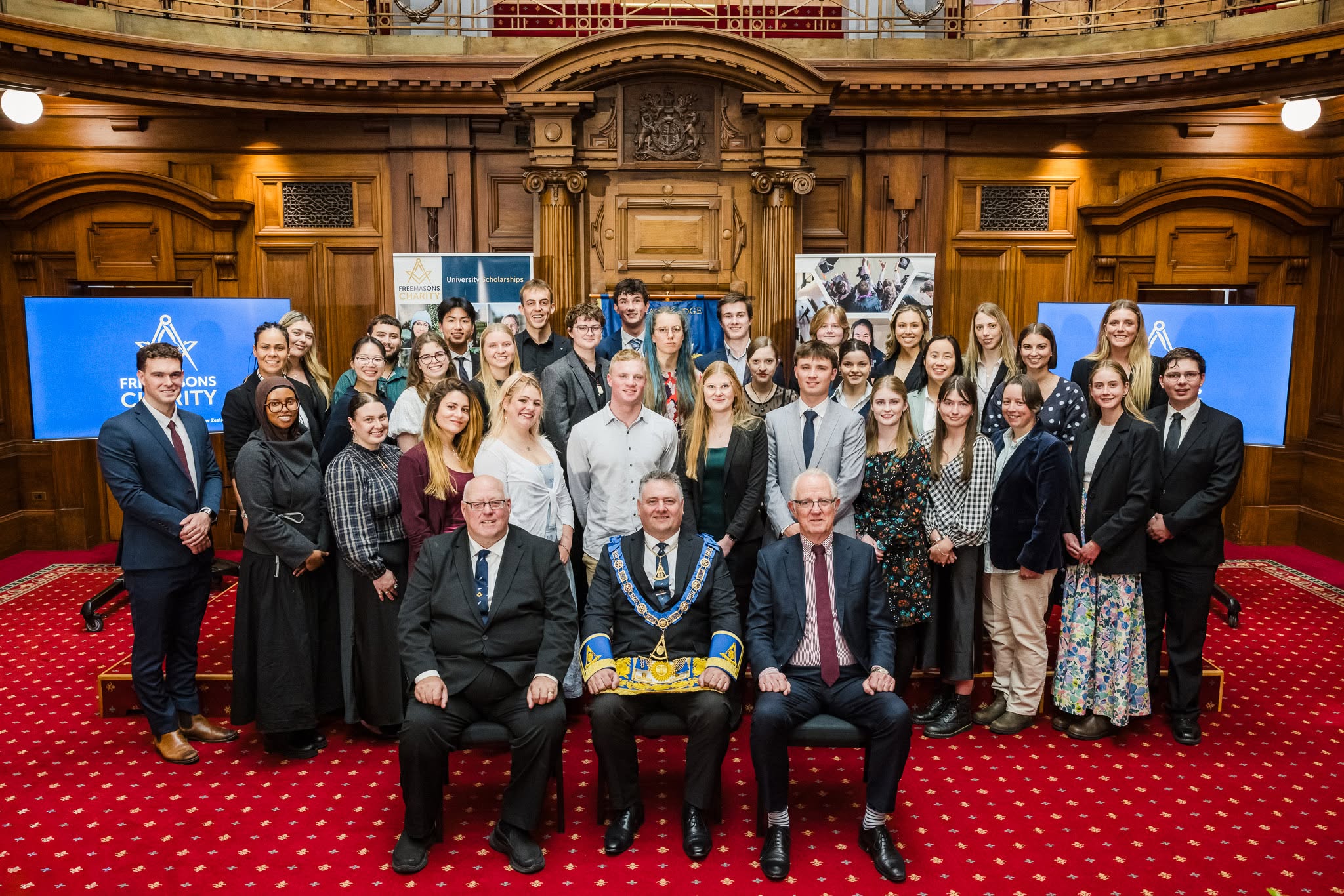
Masonic charity may take the form of a grant, scholarship, fundraiser, working bee, visit or quiet act of practical assistance. Sometimes it is carried out publicly through an organisation. At other times, it is simply one person helping another.
The form changes according to the circumstances, but the principle remains much the same: recognise a genuine need and consider what useful help can reasonably be given.
Community organisations in Hamilton or Waikato with a suitable project are welcome to contact Lodge Tawhiri No. 166.
Making an enquiry cannot guarantee that assistance will be available, but it allows the Lodge to understand the need and consider whether it, or a wider Masonic charitable organisation, may be able to help.