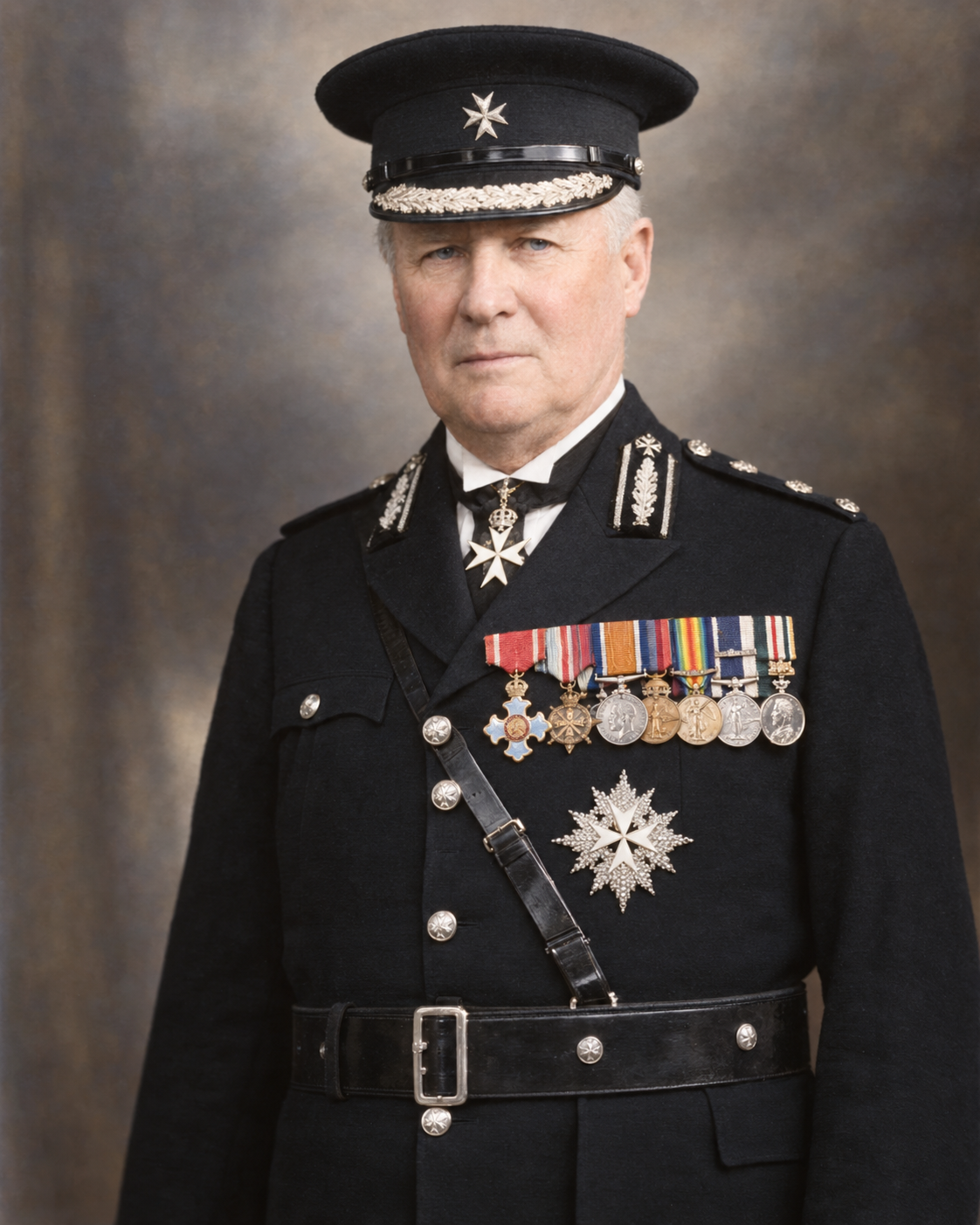
A railwayman, soldier, St John leader and one of the leading New Zealand Freemasons of his generation, RW Bro Lieutenant-Colonel George Barclay OBE VD KStJ P DepGM hosted the meeting from which Lodge Tawhiri No. 166 emerged and became its Foundation Master in 1909.
On Sunday 4 July 1909, twenty-three Brethren gathered in the home of the Frankton Junction Stationmaster to consider forming a new Masonic Lodge. Their host and chairman was George Barclay. There was no Lodge Tawhiri, no number 166, no Warrant and no purpose-built lodge room. What they had was a group of interested Freemasons, the prospect of land on which to build, and an experienced Past Master willing to lead the work. Within a matter of months the name Tawhiri had been chosen, a site opposite the railway station selected, a petition sent to Grand Lodge and Barclay elected to serve as the first Master.
That meeting would be enough on its own to secure RW Bro Lieutenant-Colonel George Barclay OBE VD KStJ P DepGM a permanent place in Tawhiri’s history. His wider life, however, places it in a much more interesting context. Barclay spent around forty years with the New Zealand Railways, served overseas during the First World War, rose to senior leadership in the Order of St John and became one of the most active Freemasons in New Zealand during the first half of the twentieth century. He belonged to Lodges throughout New Zealand and in England, helped establish new Lodges and Masonic organisations, became Grand Secretary of the Grand Lodge of New Zealand and devoted a considerable part of his later life to Masonic education and history.
Born in Scotland, Barclay came to New Zealand while young and grew up in Otago. He entered the New Zealand Railways as a cadet in Dunedin in 1879, beginning a career which would repeatedly take him to new towns and, with it, into new Masonic communities. His own Masonic career began on 6 May 1891 when he was initiated into Lodge of Otago No. 844 (EC) in Dunedin. He was Passed on 3 June and Raised on 5 August, later serving as Secretary and eventually as Master of Lodge of Otago No. 844 (EC) in 1896. His interests soon extended beyond the Craft into the Royal Arch, Knights Templar and the Ancient and Accepted Scottish Rite, establishing a breadth of Masonic involvement that would characterise the rest of his life.
The railway then took Barclay to Palmerston, where he became Stationmaster and affiliated with Lodge Palmerston No. 26 in 1903. Five years later came the transfer that matters most to Tawhiri. In 1908 he became Stationmaster at Frankton Junction, arriving as the settlement was growing rapidly around one of the country’s increasingly important railway junctions. Tawhiri’s history describes Frankton as “very much a railway town”, and the Lodge that emerged there reflected that character from its beginning. When Barclay presided over Tawhiri’s first year, twenty-five candidates were proposed and nine were railway employees. The Lodge held twenty-six meetings, fourteen regular and twelve emergency, and Barclay presided over all but one. He was also appointed Preceptor of the Lodge of Instruction, taking responsibility not simply for chairing a new Lodge but for helping establish the standard of its work.

That first year had involved much more than ceremonial work. A new Lodge needed By-laws, finances, furniture and a permanent home. The Kent Street building followed, and Tawhiri quickly developed from a group meeting in the Stationmaster’s house into an established part of Frankton life. Barclay’s own standing was rising just as quickly. On 30 May 1911, Tawhiri held an emergency meeting in his honour following his appointment as Senior Grand Warden of the Grand Lodge of New Zealand. His involvement in Waikato Freemasonry also extended beyond the Lodge he had helped establish. He joined Waikato Royal Arch Chapter No. 22 in 1909 and later served as its First Principal.
Barclay’s departure from Frankton did not diminish his Masonic activity. If anything, it broadened it. A later railway appointment took him to Auckland, where he joined United Masters Lodge No. 167 and served as its Master. He also joined Lodge Ara No. 1. United Masters Lodge No. 167 was particularly well suited to Barclay, whose interests increasingly included Masonic study and education. He presented papers, lectured and developed a reputation that would eventually extend well beyond any one Lodge. What matters here is not simply the number of Lodges with which he was associated. The pattern is more revealing: Barclay repeatedly gravitated towards Lodges concerned with education, research, service or the creation of something new.
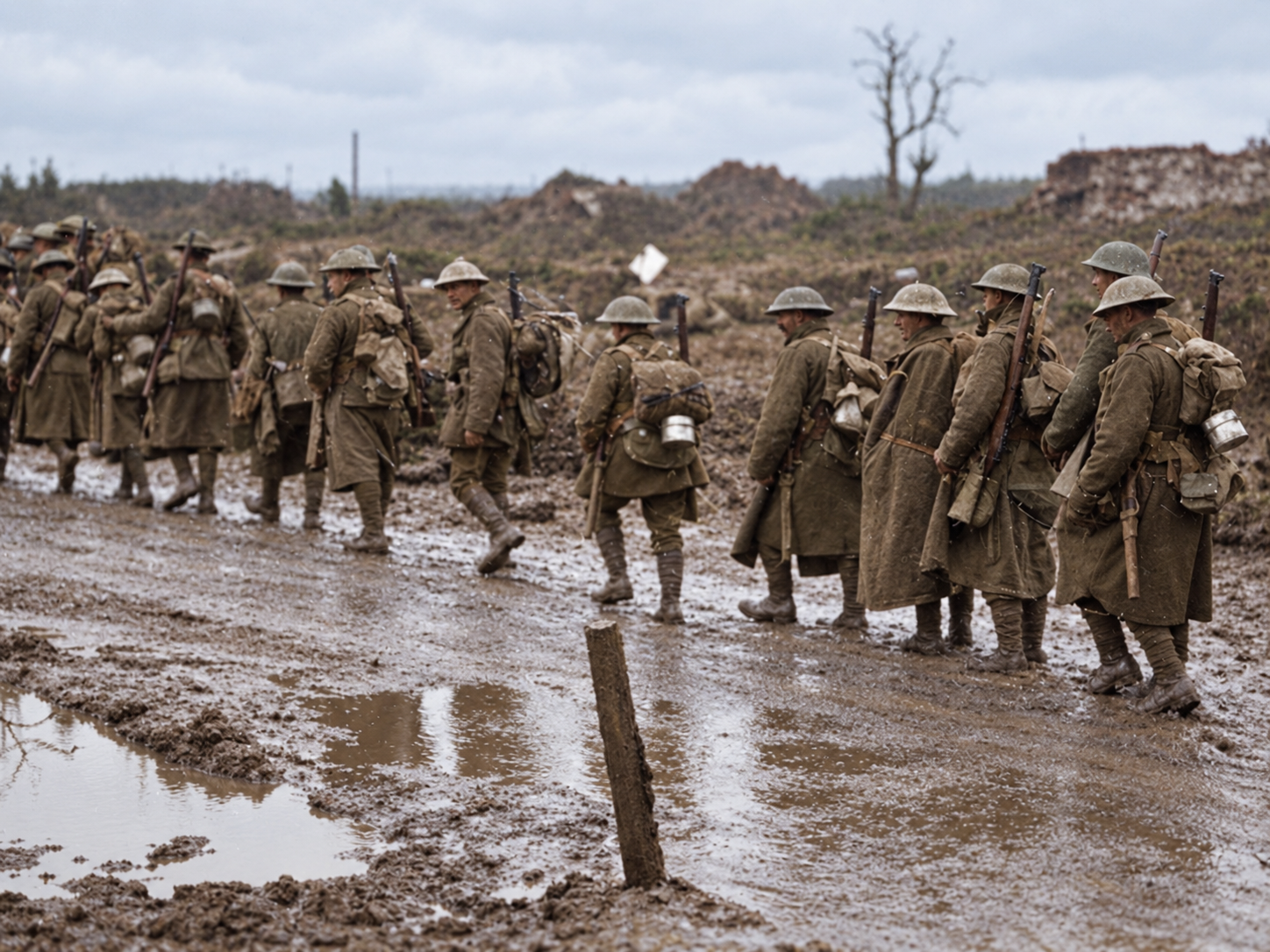
The First World War carried that pattern overseas. Barclay had a long background in New Zealand’s volunteer forces and had commanded the 16th (Waikato) Regiment before transferring to command the North Island Railway Battalion. He served with the New Zealand Engineers during the war, with service in Egypt, Gallipoli, France, Belgium and England. He rose to Lieutenant-Colonel, was twice Mentioned in Despatches and was appointed an Officer of the Order of the British Empire in the Military Division. His honours also included the Volunteer Officers’ Decoration, appointment as a Knight of Grace of the Order of St John and the Order of Danilo of Montenegro.
Even on active service, Barclay continued bringing Freemasons together. On 21 June 1916 he convened a meeting at Armentières in France which led to the establishment of the New Zealand Expeditionary Force Masonic Association, serving as its first President. The Association offered New Zealand Freemasons serving overseas a means of maintaining fellowship in circumstances far removed from their Lodges at home. It established branches in camps, depots and hospitals and grew into a substantial wartime organisation. The resemblance to Frankton seven years earlier is difficult to miss: Barclay again helped turn an informal fellowship of Freemasons into an organised body.
His wartime Masonic connections also included England. On 25 October 1917 he joined Boscombe Lodge No. 2158 (EC) in Hampshire, where the records list him as a Major. He remained a member until September 1920. When the war ended, the fellowship created among serving Freemasons continued at home. Barclay became a Charter member of The Service Lodge No. 237 in Dunedin, United Forces Lodge No. 245 in Christchurch and Combined Forces Lodge No. 284 in Auckland. These Service Lodges gave returned servicemen a Masonic home among men who shared something of the same experience.
His post-war Masonic activity was remarkably broad. Barclay became a founder and first Master of Lodge Waverley No. 226 and also served as Master of the Research Lodge of Otago No. 161, an office he would hold on three occasions. His other Craft affiliations included Lodge Gisborne No. 233, St Clair Lodge No. 246, Lodge William Fergusson Massey No. 282 and Lodge Herbert Teagle No. 300. Read simply as a list, those memberships can obscure the more interesting point. Barclay was repeatedly present where Lodges were being founded, where Masonic research was being encouraged, or where a particular community of Freemasons was being brought together.
At the same time, his service to Grand Lodge had become his principal Masonic occupation. He became Assistant Grand Secretary in 1920 and Grand Secretary in 1921, remaining in that office until 1933. In 1929 he was honoured with the rank of Past Deputy Grand Master, and after retiring as Grand Secretary he continued as Grand Lecturer during 1933 and 1934. Tawhiri’s own record of his death remembered precisely that progression: Foundation Master in 1909, Senior Grand Warden in 1911, Assistant Grand Secretary in 1920, Grand Secretary from 1921 to 1933, Grand Lecturer, and Past Deputy Grand Master.
Craft Freemasonry was only part of his Masonic life. Barclay held senior office in the Royal Arch and Knights Templar, attained the 33rd Degree in the Ancient and Accepted Scottish Rite, and was involved in the development of several other Masonic Orders in New Zealand. In 1937 he became First Grand Principal of the Supreme Grand Royal Arch Chapter of New Zealand. Yet office alone does not fully explain his influence. Barclay was also a prolific lecturer and student of Masonic history. His 1935 book, The Extinct Lodges of New Zealand, attempted to preserve the histories of Lodges which had disappeared before their records and stories were lost with them. There is a certain appropriateness in that legacy for Tawhiri today: the man who helped establish the Lodge also understood the importance of preserving the history of Lodges for those who came afterwards.
Nor was Freemasonry his only field of service. Barclay’s association with St John extended across decades. Tawhiri’s history records thirty-nine years of service and his eventual retirement as Chief Commissioner. Together with his railway and military careers, it explains the collection of distinctions attached to his name and visible in surviving portraits. His OBE, VD and KStJ reflected separate strands of a lifetime spent in military, public and voluntary service.
RW Bro Lieutenant-Colonel George Barclay OBE VD KStJ P DepGM died in Dunedin in December 1943, aged seventy-seven. Tawhiri retained more than a written memory of its Foundation Master. Its historical record notes that Barclay’s founder’s jewel and Past Master’s jewel remained among the Lodge’s possessions, while his sword was used by the Outer Guard until it was stolen during a break-in in 1984. Those objects provide tangible links with 1909, but neither is his most important legacy.
That remains Tawhiri itself. Long before Barclay became Grand Secretary, before the wartime honours, the Service Lodges, the research papers and the senior offices in other Masonic Orders, twenty-three Brethren gathered in the Stationmaster’s house at Frankton Junction. They discussed a name, a place to meet, the dues they would charge and somewhere to build. George Barclay took the chair. The course of his later life makes that afternoon more significant, not less, because Tawhiri was not the last organisation he would help establish or the last group of Freemasons he would bring together. It was an early expression of something that would characterise much of his life.
RW Bro George Barclay P DepGM did not simply belong to Freemasonry. He spent a lifetime helping to build it.
For Tawhiri, that work began at home.