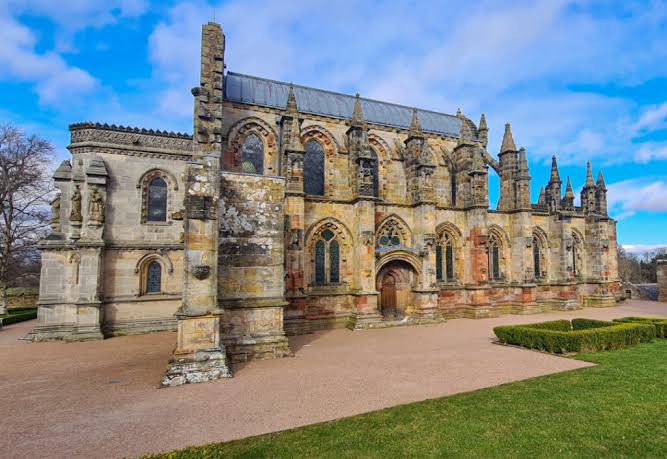
The origins of Freemasonry are often spoken about with great confidence. Depending on who is telling the story, Freemasonry began with the builders of medieval cathedrals, the ancient mysteries, the Knights Templar, King Solomon’s Temple, or some combination of all of them.
A more careful answer is less dramatic, but far more useful.
Freemasonry has a long history, but not every story about its beginning can be proved. Some parts are supported by records. Other parts belong more to legend, symbolism, or tradition. For anyone considering Freemasonry in Hamilton or elsewhere in New Zealand, it is worth knowing the difference.
At its heart, Freemasonry uses the language and tools of stone masonry to teach moral lessons. The square, compasses, level, plumb rule and rough ashlar all come from the world of builders and craftsmen. They point to ideas such as honesty, fairness, self-discipline, equality and the steady work of improving one’s own character.
That connection to building is not accidental. The most widely accepted view among Masonic historians is that modern Freemasonry developed from, or was strongly influenced by, the lodges and traditions of medieval stonemasons. These were the men who worked on castles, churches, abbeys and cathedrals. Their work required skill, trust, training, discipline and a shared understanding of standards.
In those days, a lodge was not just a meeting place. It could be a workshop, a place of instruction, and a community of men connected by their craft. Skilled masons travelled for work, learned from masters, and were expected to prove their ability. It is not difficult to see why later Freemasons found such a powerful image in the working mason: a man learning his craft, shaping rough stone, and contributing to something larger than himself.
Still, we should be careful. We cannot simply draw a straight, unbroken line from every medieval mason’s lodge to the Freemasonry practised today. The evidence is not that tidy. Freemasons New Zealand notes that the origins of Freemasonry are “lost in time”, with early written evidence from England in the 14th century and the Grand Lodge of England formed in 1717. That is a good reminder that the story is old, but also partly incomplete.
From working stone to building character
One important change was the movement from operative masonry to speculative masonry.
Operative masons were working stonemasons. They built with actual stone. Speculative Freemasons use the tools and language of masonry in a symbolic way. The work is not about constructing a cathedral or a public building. It is about building character.
By the 1600s, there is evidence of men who were not working stonemasons being admitted into lodges. One often mentioned example is Elias Ashmole, who recorded his initiation in a lodge at Warrington in England in 1646. He was not the beginning of Freemasonry, but his record is important because it gives us an early written example of what is often called speculative Freemasonry.
The better-known date is 24 June 1717. On that day, four London lodges came together at the Goose and Gridiron Tavern and formed what became known as the first Grand Lodge. This did not create Freemasonry out of nothing. Lodges already existed. But it did mark an important step in organising Freemasonry into a wider structure, with recorded meetings, officers and agreed rules.
In 1723, the Constitutions of the Free-Masons were published. These helped shape the public identity and organisation of modern Freemasonry. From there, Freemasonry spread through Britain, Ireland, Scotland, Europe, the colonies and much of the wider world.
What we do not know
This is where some of the more colourful claims can become difficult.
Freemasonry certainly uses old imagery. It draws on the building of King Solomon’s Temple. It uses symbols that feel ancient. It teaches through ceremony, allegory and ritual. Those things matter. They give Freemasonry depth and continuity.
But using ancient symbols is not the same as proving an ancient institutional origin. There is a difference between saying “Freemasonry teaches through old symbols” and saying “Freemasonry can be historically proved to have existed in its present form thousands of years ago.” The first statement is fair. The second is not something we can confidently prove.
That does not weaken Freemasonry. In some ways, it strengthens it.
A tradition does not need exaggerated claims to be meaningful. Freemasonry has survived because its central concerns are steady and human. How should a man live? How should he treat others? How does he keep his word? How does he serve his family, his community and his conscience? How does he improve without pretending to be perfect?
Those questions are just as relevant in Hamilton today as they were in London in 1717, or in the working lives of earlier craftsmen.
Why it still matters locally
In New Zealand, Freemasonry became part of local community life as towns and settlements grew. Lodges provided fellowship, structure, charitable support and a place where men could meet across differences in occupation, background and age. Te Ara, the Encyclopedia of New Zealand, describes Freemasonry as an international fraternal organisation that emphasises ritual and supports charity and community service.
Here in Hamilton, Lodge Tawhiri No. 166 has been part of that wider story since 1909. We do not need to pretend that our lodge reaches back to the ancient world to value its history. More than a century of local men meeting, learning, supporting one another and contributing to the community is history enough.
For a man quietly researching Freemasonry, the origins of the Craft can be interesting, but they are not the whole point. You do not join Freemasonry because every legend can be proved. You join because the principles still have something to say.
The Craft takes old working tools and asks a very practical question: what kind of man are you trying to become?
That is the thread that connects the old stories, the medieval builders, the early lodges, the formation of Grand Lodge, and the work of local lodges today. Freemasonry is not about escaping into the past. It is about taking lessons from tradition and applying them in ordinary life.
If you are interested in learning more about Freemasonry in Hamilton, you are welcome to read more about Lodge Tawhiri No. 166 or make a quiet enquiry through our Join page. There is no need to know all the history before asking a question. Curiosity is often the right place to begin.