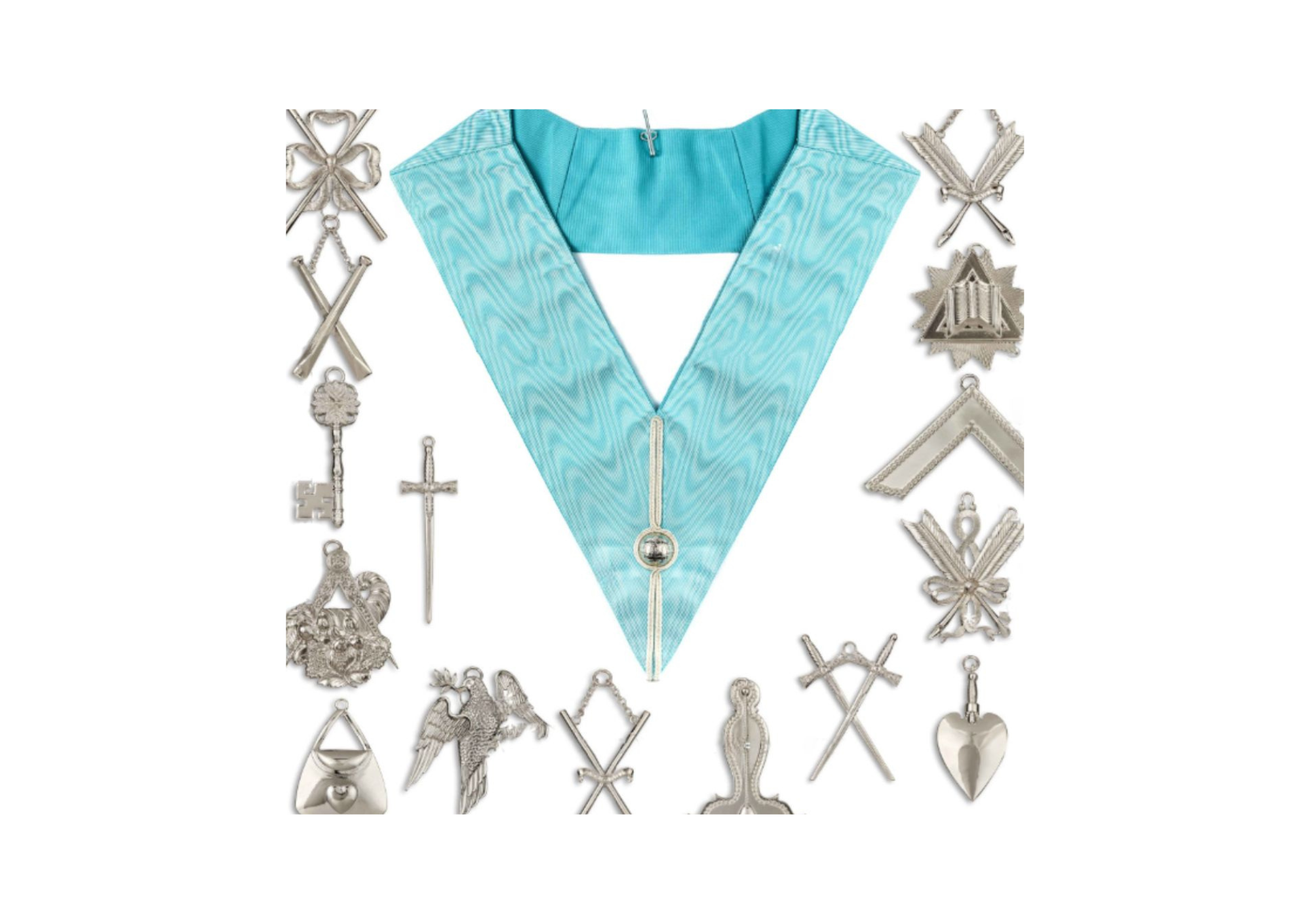
At first glance, the jewels worn by Masonic officers can appear to be decorative additions to their collars.
They are much more practical than that.
Each jewel identifies an office within the Lodge. It allows members and visitors to see who is responsible for presiding, keeping the records, managing the finances, directing the ceremonies or caring for members who may need support.
Many of the designs come from the tools and working practices of the stonemason. Others represent the particular duties attached to an office.
Together, they form a visible guide to how a Masonic Lodge is organised.
The jewel represents the office
A Masonic officer does not ordinarily wear his collar and jewel as a personal award.
They belong to the office he has agreed to hold. When his term ends, they are passed to the Brother who succeeds him.
This is an important distinction. Being invested with a collar is an honour, but it is also an acceptance of responsibility.
The jewel tells the Lodge what the officer has been entrusted to do. It should also remind the wearer that the office exists for the benefit and orderly working of the Lodge, rather than for his own status.
The Master and Wardens
The three principal officers wear jewels drawn directly from the working tools of the builder.
The Master wears the square. A stonemason uses a square to test whether an angle is correct. Within Freemasonry, it has also become an emblem of fairness, accuracy and proper conduct.
The Senior Warden wears the level. Its practical purpose is to establish a true horizontal line. Its wider meaning reminds members that they meet within the Lodge as equals.
The Junior Warden wears the plumb rule. A plumb line tests whether a wall stands upright, making it a natural emblem of upright conduct.
These jewels identify the three senior offices, but they also express something about the standards expected of the men who hold them.
The Master must govern fairly. The Wardens must support him in maintaining the order and harmony of the Lodge. Their jewels are therefore connected not only with their positions, but with the manner in which those positions should be exercised.
Jewels connected with practical duties
Other officers wear emblems that relate more directly to the work they perform.
The Treasurer wears a key, reflecting his responsibility for the Lodge’s financial affairs.
The Secretary wears two crossed pens. He records the proceedings of the Lodge, manages its correspondence and maintains the records needed for it to function properly.
The Director of Ceremonies wears two crossed rods. His role is to organise and direct the ceremonial work, helping ensure that the meeting proceeds in an orderly manner.
The Almoner’s jewel is a scrip-purse bearing a heart. It reflects a duty that is less visible but particularly important. The Almoner keeps in contact with members and dependants who may be ill, isolated, bereaved or in need of practical assistance.
The Inner Guard wears two crossed swords, while the Tyler wears a single sword. These emblems relate to their traditional duties at the entrance to the Lodge.
The Deacons, Chaplain, Organist, Stewards and other authorised officers also wear jewels associated with their respective roles.
Under the Grand Lodge of New Zealand, the approved forms of these jewels are set out in the Book of Constitution.
Investiture is more than presentation
An officer formally assumes his role when he is invested.
During an Installation meeting, the collar and jewel are placed upon him and the nature of his office is explained. The Lodge can then see who has accepted each responsibility for the coming year.
The ceremony does not, by itself, make someone an effective officer.
The Secretary must still produce accurate minutes and deal with correspondence. The Treasurer must account carefully for the Lodge’s funds. The Director of Ceremonies must know the work well enough to guide others, and the Almoner must maintain genuine contact with members who may need support.
The jewel recognises the office, but it also makes the responsibility visible.
That is why an officer’s collar should never be regarded merely as an ornament. It represents work that must actually be done.
Jewels worn for other reasons
Not every Masonic jewel identifies a current Lodge office.
A Past Master’s jewel records that a Brother has previously served as Master of a Lodge. A Founders’ Jewel may be authorised for those who became members when a new Lodge was constituted.
Centenary and 150th Anniversary Jewels may be authorised to mark significant anniversaries in a Lodge’s history. Other approved jewels may recognise long service, charitable support or membership of another recognised Masonic order.
These should not be confused with officers’ jewels.
An officer’s jewel identifies a responsibility currently being carried. Other jewels may record past service, commemorate an event or show a particular connection within Freemasonry.
This is one reason Masonic regalia can appear complicated to someone seeing it for the first time. Different items are communicating different things.
A Lodge’s work made visible
Once the principal emblems are understood, the officers’ collars become much easier to read.
The square identifies the Master. The level and plumb rule identify the Wardens. Crossed pens show where the Secretary sits, while the key identifies the Treasurer.
They are not simply decorations added to make a meeting appear formal. They show how responsibility is distributed throughout the Lodge.
At Lodge Tawhiri No. 166, the jewels worn today are the same emblems carried by earlier generations of officers. The men change, but the offices and the work attached to them continue.
That continuity is part of their meaning.
A Masonic jewel may be small, but it carries a straightforward message: this Brother has been entrusted with a particular part of the Lodge’s work.
Those interested in the wider subject can also read our guide to Masonic aprons, collars, jewels and badges in New Zealand.