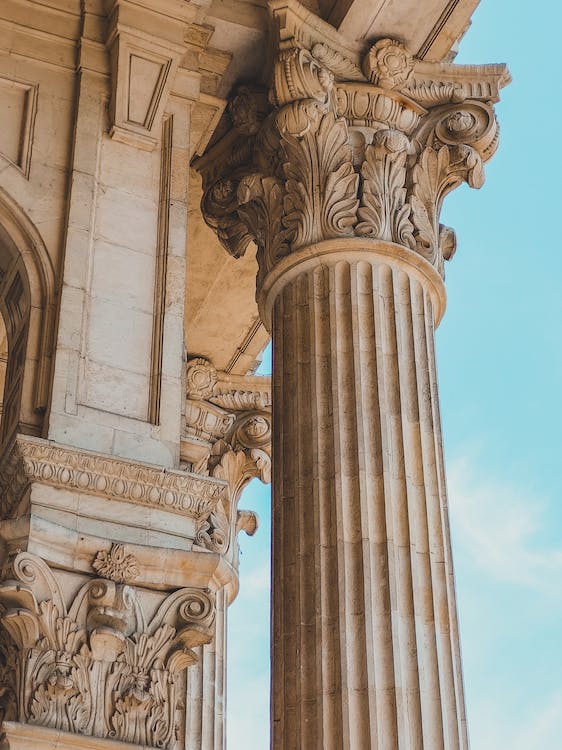
Architecture appears throughout Freemasonry.
Lodge rooms contain columns, carefully arranged furnishings and symbols drawn from the work of builders. Masonic ceremonies speak of foundations, plans, structures and individual parts being brought together to form a greater whole.
This does not mean that Freemasonry teaches architecture as a profession.
Architecture is useful because it brings purpose, planning and practical work together. A sound building must be designed carefully, constructed properly and maintained over time. It must also serve the people for whom it was built.
Those ideas have an obvious application beyond stone and timber.
A building begins with its purpose
Before an architect decides how a building should look, there must be some understanding of what it is meant to do.
A family home, railway station, church and public hall serve different purposes. Their size, layout and materials should reflect the people who will use them and the activities that will take place inside.
The same question can be asked of a Lodge.
It is possible to hold meetings, elect officers, maintain records and repeat an annual programme without considering what those activities are intended to achieve.
Architecture reminds us that activity should follow purpose.
A Masonic Lodge exists to bring men together in fellowship, provide instruction, support charitable work and encourage its members to examine their conduct and responsibilities.
The ceremonies, administration and social life of the Lodge should support those purposes. They should not become ends in themselves.
Proportion gives order
A well-designed building depends upon proportion.
A feature may be attractive or carefully made on its own but still be unsuitable if it overwhelms everything around it. A doorway can be too narrow, a room too large for its purpose or an ornament so prominent that it distracts from the whole.
Lodge life also requires proportion.
Ceremonial standards matter, but they should not exclude education, friendship or time spent helping newer members understand the Craft.
Administration is necessary, but a meeting should not become so occupied with routine business that members lose sight of why they came together.
Tradition provides continuity, but not every inherited custom carries equal importance.
Proportion does not mean giving everything the same amount of time. It means giving each part the attention its purpose requires.
The same applies to individual members. Work, family, health and community responsibilities differ from one man to another. Freemasonry requires commitment, but a sound Lodge recognises that commitment may be expressed differently according to a member’s circumstances.
Different parts support one structure
A building is formed from many separate parts.
Walls, beams, floors, windows, foundations and services each perform different functions. Some are immediately visible. Others remain hidden, although the building could not operate safely without them.
A Lodge is much the same.
The Master occupies the most prominent position, but the Lodge does not depend upon him alone. Its work also requires Wardens, a Secretary, Treasurer, Director of Ceremonies, Almoner, Deacons, Stewards and members willing to undertake less visible responsibilities.
Someone prepares the room. Someone maintains the records. Someone welcomes a visitor, helps a newer Brother or contacts a member who has been absent.
These contributions are not identical, but they serve the same Lodge.
Architecture therefore provides a better image than a group of individuals standing separately. Each part retains its own purpose while contributing to the strength and usefulness of the whole.
The space affects the meeting
Buildings do more than protect people from the weather. Their arrangement affects how people gather, move and pay attention.
A courtroom, classroom and dining room encourage different kinds of behaviour because each has been arranged for a particular purpose.
A Masonic Lodge room is also arranged deliberately.
The principal officers occupy established positions. Members face towards the centre of the room, and movements take place in an orderly manner rather than casually.
This creates an atmosphere different from an ordinary committee meeting.
The arrangement encourages attention and helps separate the formal work of the Lodge from the distractions of everyday life. It also allows the ceremonies to be presented consistently, so that each member encounters the same broad structure through which earlier generations were instructed.
Some details are properly understood through participation rather than public description. It can still be said openly that the Lodge room is not merely a decorative backdrop.
The space forms part of the way Freemasonry communicates its lessons.
Buildings connect one generation with another
Architecture can outlast the people who created it.
A builder may work on a structure that will later be used by people he will never meet. Those future users inherit the results of decisions made before they arrived.
Members of a Lodge receive a similar inheritance.
They use records, regalia, customs and facilities maintained by earlier generations. They benefit from buildings that others funded, furnishings that others purchased and traditions that others took the trouble to preserve.
That inheritance is not simply a privilege. It carries a responsibility.
Present members must decide what should be maintained, what requires repair and what may need to change. Preserving everything without consideration can be as careless as discarding something merely because it is old.
Good custodianship requires judgement.
The aim is not to freeze a Lodge at one moment in its history. It is to hand on something sound, useful and recognisable to those who come afterwards.
Architecture at Lodge Tawhiri
Lodge Tawhiri No. 166 meets in the Blue Room at the Waikato Masonic Centre in Hamilton.
The room provides an ordered setting for ceremonies, education and the ordinary work of the Lodge. Its arrangement connects meetings held today with a much older Masonic tradition.
The value of architecture in Freemasonry is not that every old building or inherited practice must remain unchanged.
The lesson is more practical.
Purpose should guide design. Separate parts should work together. What is visible should be supported by what is sound, and what has been inherited should be cared for responsibly before it is passed on.
A building is judged not only by how it appears, but by whether it continues to serve its purpose.
The same can be said of a Lodge.