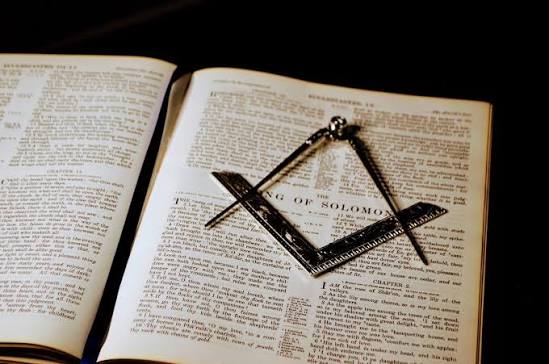
A person can sometimes recognise the square and compasses before they know much else about Freemasonry.
They may have seen it on the front of a lodge building, on an apron, on a lapel pin, in an old family photograph, or on a headstone. It is simple, distinctive and widely recognised. For many people, it is the symbol of Freemasonry.
That raises a fair question. Why these two tools? Why not a crown, a book, a handshake, a building, or some other emblem?
The answer is not that the square and compasses were invented as a modern logo. They became important because they grew naturally out of the language, history and teaching method of Freemasonry itself.
Freemasonry and the tools of building
Freemasonry draws much of its imagery from the work of stonemasons. The exact beginnings of Freemasonry are not easy to pin down to one place or one date, and honest Masonic history should say that clearly. What can be said is that the Craft took many of its customs, symbols and ways of teaching from the world of builders and craftsmen.
A stonemason needed tools. Not decorative tools, but working tools. A square helped test whether work was true and properly formed. Compasses helped measure, draw and set proper limits. These were practical instruments used in the making of real things.
As Freemasonry developed into a moral and fraternal society, those practical tools became symbols. They were no longer only about stone, timber, measurement or design. They became a way of speaking about character.
That is one of the reasons the symbol has lasted. It is not complicated for the sake of being complicated. It starts with something ordinary and asks a deeper question: what would it mean for a man to build his life with the same care that a good craftsman gives to his work?
The square
The square is one of the clearest symbols in Freemasonry. In ordinary language we still speak of being “square” with someone. We mean being honest, fair and straight in our dealings.
That same sense is close to the Masonic use of the symbol. The square points to upright conduct. It reminds a Mason that his actions should be tested against something better than convenience, temper or self-interest.
In lodge life this matters. Freemasonry is not only about attending meetings or learning ceremonies. It asks a man to think about how he lives beyond the lodge room. How does he treat his family? How does he conduct himself at work? Can others rely on his word? Does he deal fairly with people when nobody is watching?
The square is a quiet reminder of those questions.
For a lodge such as Lodge Tawhiri in Hamilton, this is not theoretical. A local lodge is made up of men who live and work in the same wider community. Members meet in the lodge room, but they also carry their conduct into homes, workplaces, churches, sports clubs, schools and community organisations across Hamilton and the Waikato. The symbol on an apron or jewel only means something if the man wearing it is trying to live by what it represents.
The compasses
The compasses are different, but just as important.
A pair of compasses draws a circle. It sets a boundary. It marks a proper distance. In Masonic symbolism, that idea naturally lends itself to self-control, restraint and balance.
That may sound old-fashioned, but it is deeply practical. Many of the problems in ordinary life come from a man not knowing where the line is, or knowing it and stepping over it anyway. Anger, pride, greed, careless words, poor habits and selfish decisions can all damage relationships and reputation.
The compasses remind a Mason that freedom does not mean doing whatever he likes. A good life needs limits. It needs discipline. It needs the ability to govern oneself.
That is not dramatic language. It is just true. A man who cannot restrain himself will struggle to be trusted, no matter how clever or capable he may be. A man who learns self-command becomes steadier, more reliable and more useful to those around him.
Why the two belong together
The strength of the square and compasses is that they work together.
The square points outward to conduct. It asks whether a man’s actions are honest, fair and upright.
The compasses point inward to self-government. They ask whether a man is keeping his own passions, habits and behaviour within proper bounds.
Taken together, they say a great deal about Freemasonry without needing many words. They speak of building, but not merely buildings. They speak of measurement, but not merely measurement. They speak of the work of becoming a better man, not in a loud or boastful way, but through steady effort.
This is why the symbol is not just a badge of membership. A badge can tell others what organisation a person belongs to. A symbol should also remind the person wearing it what he is meant to be doing.
That is an important distinction.
A public symbol, not an invitation to guesswork
Because the square and compasses are so widely recognised, they can also attract speculation. Some people imagine that every Masonic symbol must conceal something strange or secret. That is not a helpful way to understand Freemasonry.
Like many traditions, Freemasonry uses symbolism to teach. Symbols allow ideas to be remembered, reflected on and returned to over time. They are not there to make the Craft look mysterious to outsiders. They are there because men often learn well through image, repetition, ceremony and example.
There are parts of Masonic ceremony that are private to members, and those should be respected. But the general meaning of the square and compasses can be discussed plainly. They are tools of building, used as symbols of moral conduct, self-discipline and personal improvement.
That is enough for a public explanation.
Why the symbol endured
The square and compasses endured because they are simple, old and meaningful.
They connect modern Freemasonry to its building imagery. They are easy to recognise across countries and languages. They can appear on a lodge building, a letterhead, a jewel, an apron or a charitable notice and still be understood as Masonic.
Most importantly, they continue to teach.
A man might first notice the square and compasses because they look distinctive. If he looks a little deeper, he may find that they point to something much more grounded: honesty, restraint, discipline, service and the careful shaping of character.
Those are not fashionable ideas, but they remain good ones.
Freemasons New Zealand today is not about stonework, and members of Lodge Tawhiri are not building cathedrals or castles in Hamilton. But the old language of building still has value. It reminds us that character is not formed by accident. It is worked on, tested, corrected and strengthened over time.
That is why the square and compasses became the symbol of Freemasonry. Not because they were clever branding, but because they say, in two simple tools, what the Craft asks a man to consider.
Is your life square? Are your actions within proper bounds? Are you building something worthy?
For those quietly exploring Freemasonry in Hamilton or the wider Waikato, that is a good place to begin. If those questions interest you, you are welcome to learn more about Lodge Tawhiri No. 166 and make an enquiry when the time feels right.